
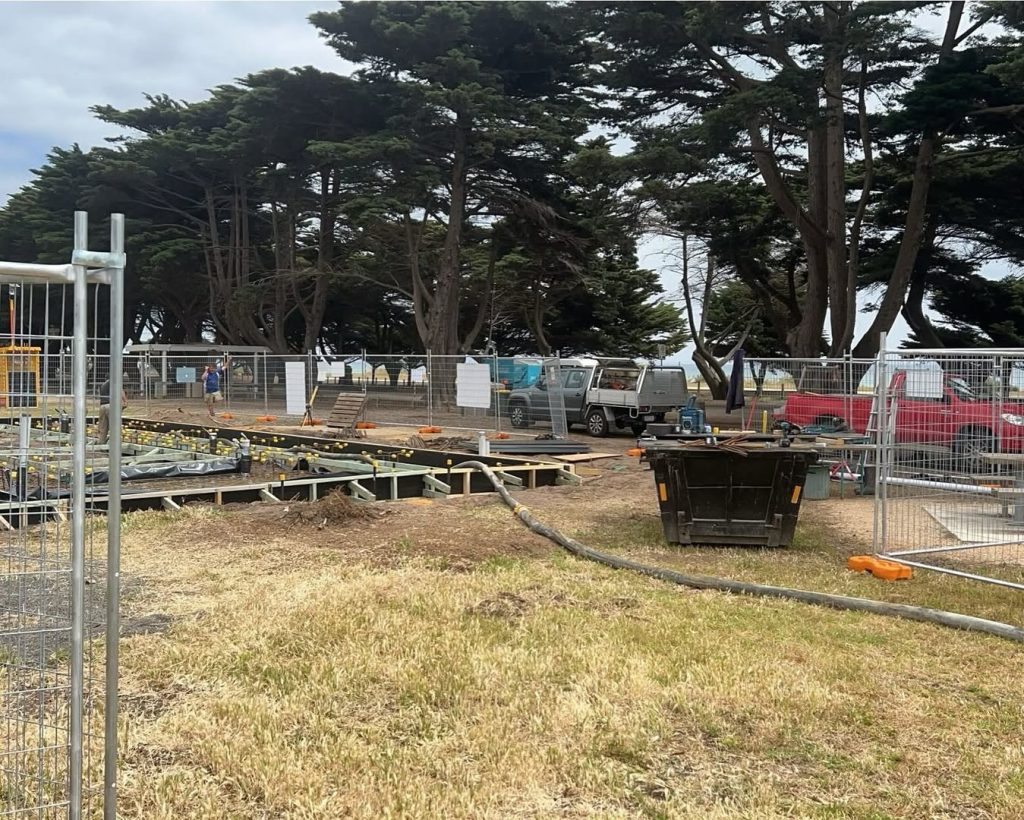
Steel pipeline carries most of the pressure; rubber hose at the end gives flexibility to reach formwork corners, climb over obstacles, and swing with the boom tip. Hose is also the first thing a homeowner sees crossing their restored lawn — and the first component to fail when worn, kinked, or abused. Hose management is half plumbing, half diplomacy on established Melbourne properties.
Routing on residential sites
Line pump jobs route hose from street to backyard — over fences via boards, along paths, sometimes through garage. Good routing:
- Protects surfaces — plywood over paving, garden beds flagged with owner.
- Minimises bends — every kink costs pressure and risks segregation; see reach planning.
- Secures hose on slopes — runaway hose on a Geelong hillside block is real.
- Plans strip path before lay-down — reversing hose through rose bushes never wins friends.
Our line pump crews walk the route with the concreter before first pipe section lands.
Bend radius and kinking
Rubber hose has minimum bend radius — kink below it collapses internal passage, spikes local pressure, blocks. Operators use elbows and bends in steel section rather than forcing hose radius. At boom tip, boom operator and hose handler coordinate — sharp kinks at full output cause hose whip risk covered in SWMS.
Wear inspection
External abrasion from dragging on aggregate; internal wear from mix and fibre. Bulges, soft spots, exposed reinforcement — hose replaced before pour, not patched on site with tape and hope. Fleet maintenance includes hose inventory rotation.
Length and diameter
Hose diameter matches pipeline — step-downs at transitions deliberate, not improvised. Extra hose length adds friction; operators carry appropriate lengths, not "all of it just in case."
Handler role at discharge
Hose handler guides end — not standing in unsupported hose loop. On decorative pours, steady hose movement defines finish quality. Communication with pump operator via radio or agreed signals.
Wash-out and hose care
After pour, hose cleared with pipeline — set concrete in hose is tomorrow's block. Proper wash-out extends hose life and prevents cross-contamination on next job's colour mix.
Homeowner communication
Hose crosses private property — permission and protection agreed at booking. MetroFlow operators explain route to owners on residential slabs and driveways; surprises cause disputes mid-pour.
Hose is the last metre of a long system — managed well, it's invisible; managed badly, it's the story the client tells for years.
Steel to rubber transition
Transition from steel pipeline to rubber hose is a pressure step — clamp integrity critical. Operators inspect transitions each shift on multi-day jobs; vibration loosens clamps gradually. Torque check part of morning pre-start.
Strip and store after pour
Hose stripped in reverse order of lay, coiled without kinks, stored off ground on truck — ready for next job without permanent bend set. Homeowners notice hose care on their lawn; coils dragged carelessly tear turf unnecessarily.
Long hose runs and handler staffing
Extended rubber hose at end of long line needs handler staffing — dragging heavy loaded hose solo causes kinks and injury. Two handlers on long decorative runs standard MetroFlow practice; labour cost in quote transparency beats solo heroics.
Hose replacement schedule invisible to client until bulge seen — professional companies replace on inspection interval, not on failure only.
Frequently asked questions
- Will hose damage lawn? Minimised with boards and route planning — discuss sensitive areas at booking.
- How heavy is hose? Heavy when loaded — handlers required on long runs.
- Can hose go through house? Sometimes garage route — floor protection client responsibility.
- Hose length limit? Part of overall line plan — friction accumulates.
Established hedge lines along side access cannot always be avoided — hose boards and pre-agreed route with owner prevent branch damage disputes; photo record before lay protects both parties.
Commercial fit-out phases sometimes pump after ceiling grid partial install — hose route negotiated with services trades to avoid snagging on hangers; pre-pour walk with services coordinator prevents ceiling damage dispute.
Line pump strip order reversed from lay prevents hose trapped under steel pipe sections — operator training includes strip sequence to avoid pinching loaded hose.
Booking with MetroFlow
Every pour starts with the same information: address or site, estimated volume, mix details if known, and photos of access from street to pour point. We respond with pump type recommendation, boom class if applicable, and all-in pricing without hidden wash or travel surprises on standard Metro jobs. On program work across Victoria, we hold rates and assign consistent operators where repeat quality matters. Whether your job is a Narre Warren house slab, a Geelong warehouse bay, or a Richmond basement wall, the physics of pumping don't change — only the geometry and mix do. Send the details through our quote form or call direct; we'd rather talk you out of the wrong pump than sell you the expensive one. Good pours are boring pours — preparation, honest communication, and operators who've seen your problem before make pour day forgettable in the best way.
Established property with delicate access? Send photos of the route — we'll plan hose path and protection at quote stage.