
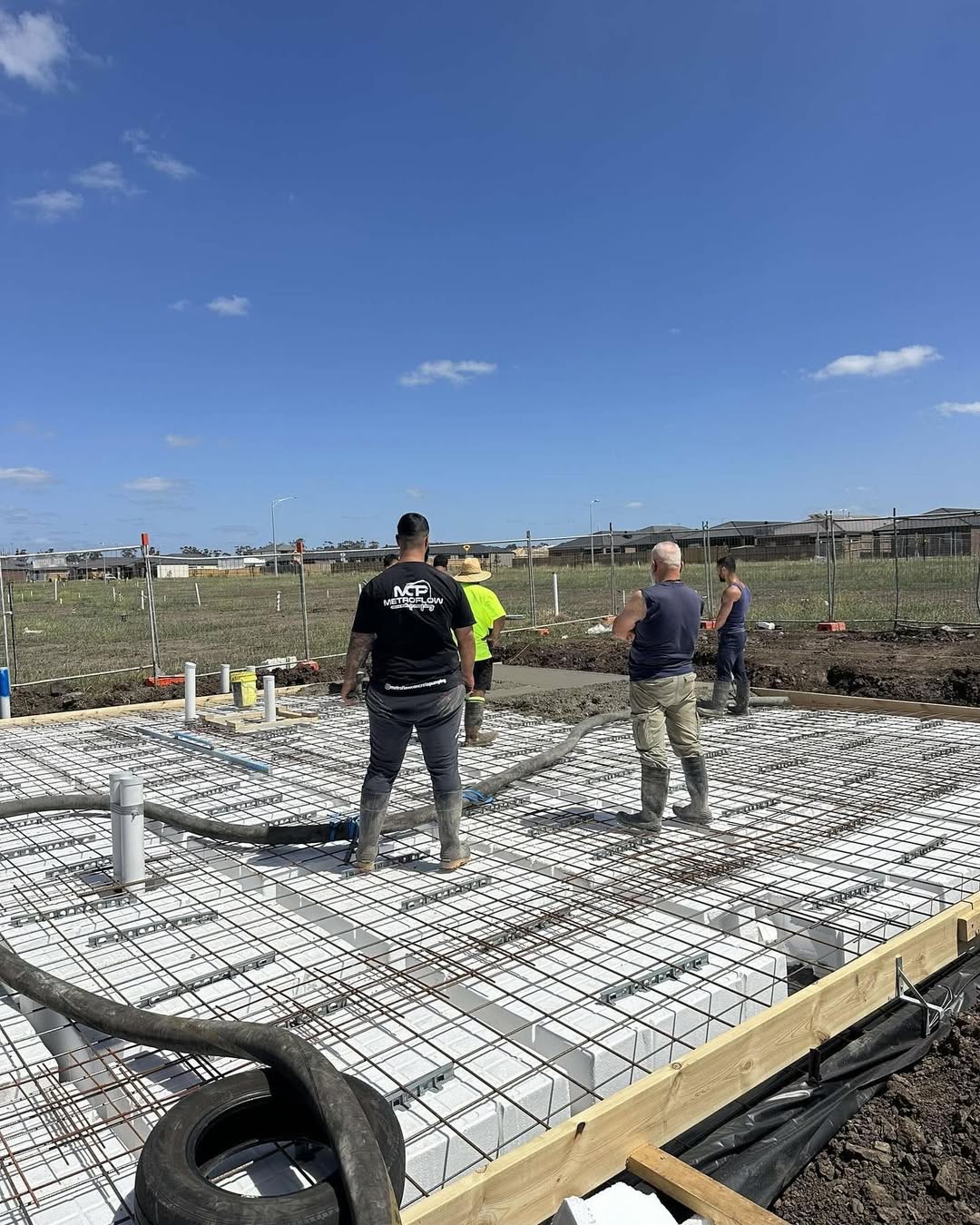
Here's a trade secret: the difference between a smooth pour and a stressful one is almost never the pump, the concrete or the weather. It's preparation. The jobs that go wrong are the ones where something obvious — a locked gate, a missing decision-maker, an under-ordered load — surfaces at 7am with three agitator trucks en route.
This is the checklist we wish every client ran the day before. It takes twenty minutes and it makes pour morning boring, which is exactly what pour morning should be.
1. Access — the pump has to get in
- Confirm where the pump will stand. We agree this at booking, but double-check nothing has changed: no skip bin delivered onto the spot, no car parked there overnight, no fresh trench across the driveway.
- Unlock everything. Gates, side access, site fencing. If we're running line through the house or garage, doors open and floors protected.
- Clear the line route. For line pump jobs, walk the path the hose will take and move anything fragile, trip-hazardous or in the way. Read more in our line pump guide.
- Think about neighbours. If the pump or trucks will occupy street parking or block a shared driveway, a friendly heads-up the day before prevents an unfriendly conversation on the day.
2. The concrete order — where most problems start
- Volume. Measure twice, order once. Running short mid-pour means a cold joint or an expensive part-load; wildly over-ordering wastes money. Your concreter should confirm the final number, including allowance for wastage in the line (we'll tell you how much).
- Mix. Confirm MPa, slump and aggregate size with your supplier — and tell us the mix too. Pumpability matters: a harsh 40MPa mix with big stone behaves very differently in a line than a standard house-slab mix.
- Truck spacing. Agree delivery intervals with the batch plant. Trucks bunched up rack up waiting time; trucks spread too thin stall the pour. For big pours, we manage this with the plant directly.
- First truck timing. The pump needs to be set up and primed before concrete arrives. We arrive early for exactly this reason — make sure the plant isn't earlier still.
3. People — who's doing what
- Finishing crew booked and confirmed. The pump places concrete; the concreters make it a slab. They set the pour rate, so they need to be on site before the first truck.
- A decision-maker reachable. Someone who can answer "the load is 0.4 cubes short — order more or pull it thin?" in thirty seconds, not after four phone calls.
- Site contact for us. A name and mobile number for the person we call from the truck.
4. The pour area itself
- Formwork finished and braced. Not "nearly". Pumped concrete arrives fast, and weak formwork finds out quickly.
- Steel, pods and services signed off. Inspections done, penetrations sleeved, chairs in place. Once concrete is moving nobody wants to spot a missing conduit.
- Wash-out location agreed. We contain and remove our wash-out, but we'll agree the spot with you in advance — away from drains, gardens and the neighbour's crossover.
5. Weather and timing
- Check the forecast the afternoon before. Rain doesn't automatically cancel a pour — your concreter makes that call — but everyone should make it together, early. Rescheduling at 5pm is free-ish; rescheduling at 7am costs someone money.
- Hot days: pour early, have aliphatic alcohol/evaporation retarder on hand, and talk to the plant about retarders. Cold mornings: see our winter pumping guide — mostly it means patience and later starts.
6. Safety basics
- Kids and pets inside for the duration. Pumps, trucks and hoses are magnetic to both.
- PPE for anyone near the pour — at minimum boots, hi-vis and glasses. Concrete burns are real; nobody handles hose without gloves.
- Overhead powerlines flagged to us in advance (this is critical for booms — see the access guide).
The night-before text
We send every client a confirmation the afternoon before: arrival time, set-up position, operator's name. Reply to it with any change on your end — even a small one. The pours that go perfectly are the ones where nobody is surprised by anything after 6am.
Booking a pour and want us to walk the checklist with you? Get in touch — five minutes on the phone the week before beats an hour of drama on the day.