
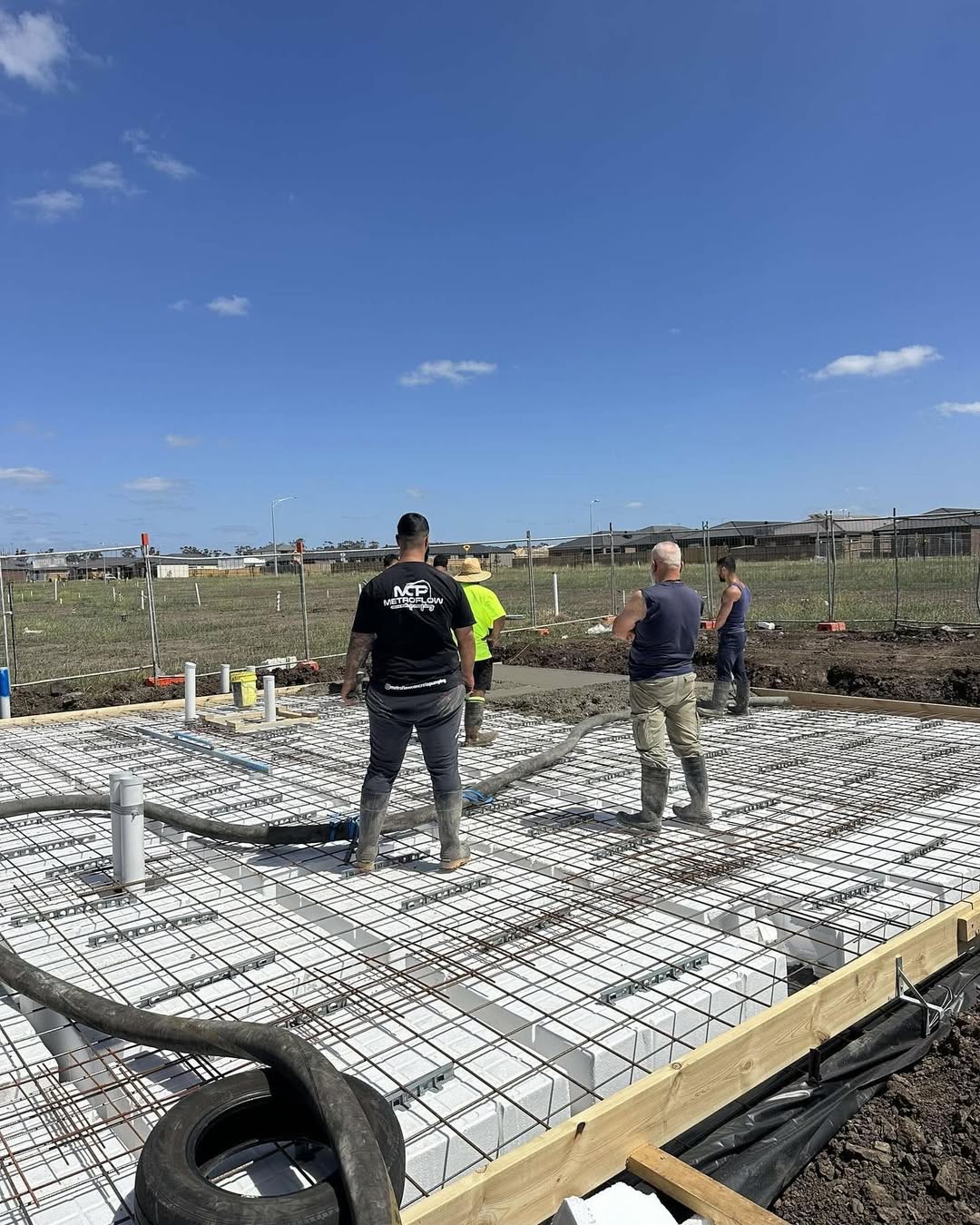
Segregation in a pump line means the mix separates — paste and fine material move faster than coarse aggregate, or water runs ahead of solids. Out the hose end you might see stone-heavy concrete, then paste-only slurry, then nothing as the line packs solid. Finishers see it as variable consistency; operators see it on the pressure gauge first. Either way, the pour slows and quality suffers.
Common causes
- Stop-start pumping — each restart shuffles fines and stone differently; deadly on exposed aggregate.
- Excessive pressure at bends — paste squeezes through; stone lodges at reducers and 90°s.
- Over-wet mix — bleed under pressure; lean mixes and badly adjusted loads both do it.
- Under-wet harsh mix — stone locks without lubricating paste; common on mis-specified rich mixes.
- Long idle with line full — stiffening isn't segregation strictly, but behaves similarly at restart.
- Air ingestion at hopper — pulsing flow — ties to intake issues.
What operators watch for
- Pressure oscillation without output change.
- Variable appearance at hose — colour shift, stone content changing load-to-load while mix ticket identical.
- Sudden pressure drop then rapid climb — partial paste run followed by stone pack.
- Unusual heat at clamps and bends.
Prevention beats clearing
- Continuous pumping mode matched to crew — don't race idle waiting for finishers.
- Route planning — fewer sharp bends; see line planning.
- Mix design pumpability review before pour — plant, concreter, pump operator on same page.
- Don't add water without authority — destroys grading and accelerates bleed.
- Prime and lubricate line correctly — priming procedure.
When segregation becomes a block
Partial blocks from stone pack at elbows respond to controlled reverse and pressure management — trained operators only; amateur hammering on clamps makes it worse. Full blocks may require line strip — time, waste, standing trucks. Prevention is hours cheaper.
Quality impact beyond downtime
Segregated concrete placed in formwork creates weak zones — honeycomb, sand piles, inconsistent strength. On structural work that's engineer notification; on decorative work that's aesthetic failure. Pump operators aren't separate from quality — they're upstream of it.
Commercial vs residential
Same physics on a 15m³ driveway and a 300m³ warehouse — scale changes cost, not mechanism. Commercial programs document mix tickets; residential relies on communication. Tell us the mix; we'll flag harsh designs early.
Segregation isn't bad luck. It's physics you manage with flow, route, and mix — or pay for later.
Reading the hose end
Experienced finishers feel segregation before operators see gauge change — "this load looks sandy" is worth heeding. Stop, diagnose: mix ticket change, idle time, bend geometry, intake pulsing. Continuing placement poisons the strip — rework costs more than one rejected truckload.
Post-block recovery
After partial block clearance, next strokes may carry segregated material — operators waste into skip until uniform appearance returns before directing into formwork. Finishers appreciate the discipline; homeowners never see the weak patch that was avoided.
Mix design review service
MetroFlow offers pre-pour mix review on long-line and decorative jobs — not engineering sign-off, but operator flag on harsh grading before order locked. Free on booked pours because blocked line costs us too. Send mix sheet with quote request when in doubt.
Aggregate moisture variation day-to-day changes pumpability — operator adjusts rate; plant adjusts water within spec. Communication chain prevents "blame the pump" default.
Frequently asked questions
- First sign of segregation? Variable appearance at hose, pressure oscillation — operator catches early.
- Can segregation be reversed in line? Rarely — often requires clear, waste, reprime.
- Does slow pumping always help? Steady continuous often beats slow stop-start — rhythm matters.
- Mix or operator fault? Sometimes both — diagnosis before blame default.
On long downhill line runs, gravity assists flow but increases speed at hose end — operator moderates output so finishers aren't flooded on sloping sites common in the Dandenong Ranges and Geelong hillside subdivisions.
Batch plant QA occasionally pulls retained sample while pour proceeds — if sample slump diverges from hose appearance, operator pauses for ticket comparison before placing questionable load into structural element.
MetroFlow operators log pressure baseline at pour start for long commercial lines — trend comparison mid-pour triggers proactive slowdown before block forms.
Booking with MetroFlow
Every pour starts with the same information: address or site, estimated volume, mix details if known, and photos of access from street to pour point. We respond with pump type recommendation, boom class if applicable, and all-in pricing without hidden wash or travel surprises on standard Metro jobs. On program work across Victoria, we hold rates and assign consistent operators where repeat quality matters. Whether your job is a Narre Warren house slab, a Geelong warehouse bay, or a Richmond basement wall, the physics of pumping don't change — only the geometry and mix do. Send the details through our quote form or call direct; we'd rather talk you out of the wrong pump than sell you the expensive one. Good pours are boring pours — preparation, honest communication, and operators who've seen your problem before make pour day forgettable in the best way.
Long line or decorative mix? Share details at quote — we'll plan route and rate to keep paste and stone arriving together.