
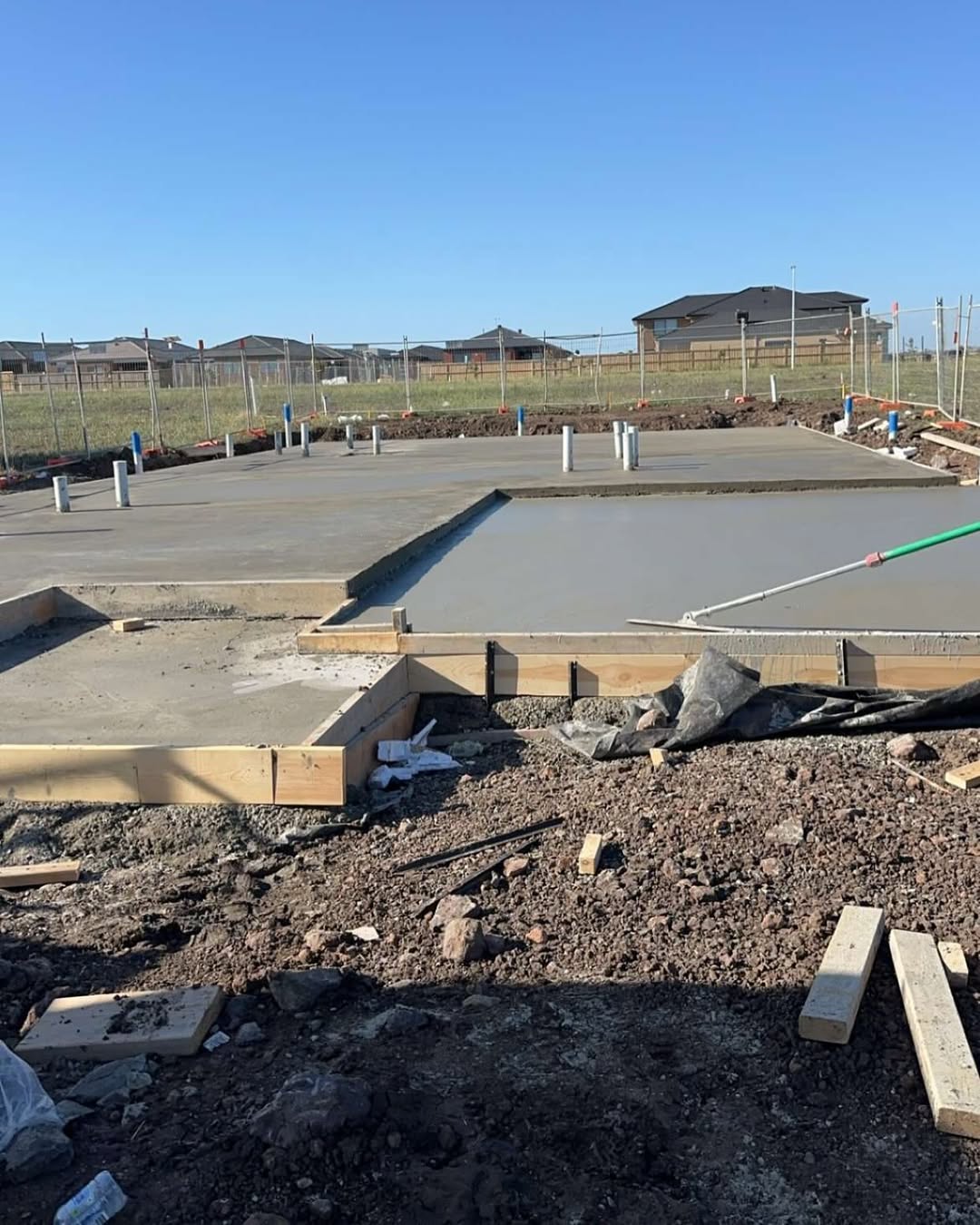
Nobody hires a pump for priming and wash-out — they hire for concrete in formwork. But every experienced operator knows pour quality starts before the first truck and ends after the last hose stroke. Priming lubricates the line; wash-out clears it before set material becomes a permanent fixture. Both done badly cost more than doing them properly costs time.
Priming — why the line needs a head start
Dry steel pipeline has high friction. First concrete through a dry line segregates, packs at bends, and blocks — before you've placed a useful cube. Priming puts a lubricating slurry or approved priming product through the full line ahead of structural mix:
- Coats pipe walls so paste doesn't scrape off at first bends.
- Confirms line integrity — leaks show before expensive mix enters.
- Verifies pump function — pressure response before commit.
Priming isn't "optional on short runs." Short runs block faster because there's less room to recover. Our operators prime every pour — residential line or boom.
Common priming mistakes
- Rushing slurry preparation — wrong consistency doesn't lubricate.
- Priming only part of the line — stone hits dry bend, block follows.
- Starting structural mix before priming exits hose end — priming material lands in formwork unless planned (usually wasted separately).
- Using water alone — insufficient lubrication on long or vertical runs.
Wash-out — machine care and legal duty
After the pour, concrete remaining in line, hopper, and S-tube sets within hours. Wash-out uses water (and sometimes sponge balls on some systems) to clear the pipeline into a contained area — never into stormwater drains on Melbourne sites.
- Wash area agreed at booking — bund, pit, or designated strip on large commercial.
- Slurry disposed per site and EPA expectations — we don't dump on nature strips.
- Complete wash before demobilisation — tomorrow's block starts today if wash fails.
Our pricing includes wash-out where quoted all-in — ask cowboys what their wash plan is.
Time implications
Priming adds minutes at start; wash adds minutes at end. Standing trucks during wash isn't the issue — trucks finish before wash. Builders who schedule "pump leaves instantly at last cube" misunderstand the process. Allow wash window in program.
Environmental incidents
Cement wash water in drains triggers fines and community anger — especially on tight inner-suburban infill. Containment is operator discipline and site planning from prep checklist.
Link to maintenance
Wash-out quality drives fleet maintenance costs — operators who half-wash create tomorrow's hydraulic and pump-end repairs. Professional companies treat wash as operational, not optional cleanup.
Priming and wash-out aren't line items to cut — they're why the next job starts clean and today's pour didn't block at load one.
Environmental compliance Melbourne
Melbourne Water and council EPA expectations treat cement slurry as pollutant — wash containment is legal requirement, not nicety. MetroFlow brings bunding consumables on jobs where site bund isn't pre-built; slurry set aside for drying and disposal per site environmental plan.
Residential neighbour courtesy
Wash water smell and mud on nature strip generate complaints faster than pump noise on some jobs. Wash zone agreed away from neighbour driveways; rinse solids captured, not hosed to gutter. Five minutes planning saves angry calls to council.
Sponge ball systems
Some pipeline configurations use sponge balls for wash and priming assist — operator trained on when ball appropriate vs slurry-only method. Wrong ball size in reducer causes block during wash — ironic end to pour day. Method matches equipment spec, not guesswork.
Commercial sites sometimes require wash water volume logged for environmental reporting — operator notes approximate volume for site records on request.
Frequently asked questions
- Is priming included? Yes in MetroFlow all-in quotes — standard procedure every pour.
- Where does wash water go? Agreed containment on site — never stormwater drain.
- How long after last cube? Wash immediately — set concrete in line is emergency, not plan.
- Can wash happen next day? No — demobilisation requires clear line same day.
Some commercial sites require wash water pH check before disposal to on-site treatment plant — operator notifies site environmental officer when pH strip test needed; planning prevents after-hours EPA call.
Booking with MetroFlow
Every pour starts with the same information: address or site, estimated volume, mix details if known, and photos of access from street to pour point. We respond with pump type recommendation, boom class if applicable, and all-in pricing without hidden wash or travel surprises on standard Metro jobs. On program work across Victoria, we hold rates and assign consistent operators where repeat quality matters. Whether your job is a Narre Warren house slab, a Geelong warehouse bay, or a Richmond basement wall, the physics of pumping don't change — only the geometry and mix do. Send the details through our quote form or call direct; we'd rather talk you out of the wrong pump than sell you the expensive one. Good pours are boring pours — preparation, honest communication, and operators who've seen your problem before make pour day forgettable in the best way.
First pump hire? Book with MetroFlow — wash included, containment planned, operators who won't leave set concrete in your driveway line.