
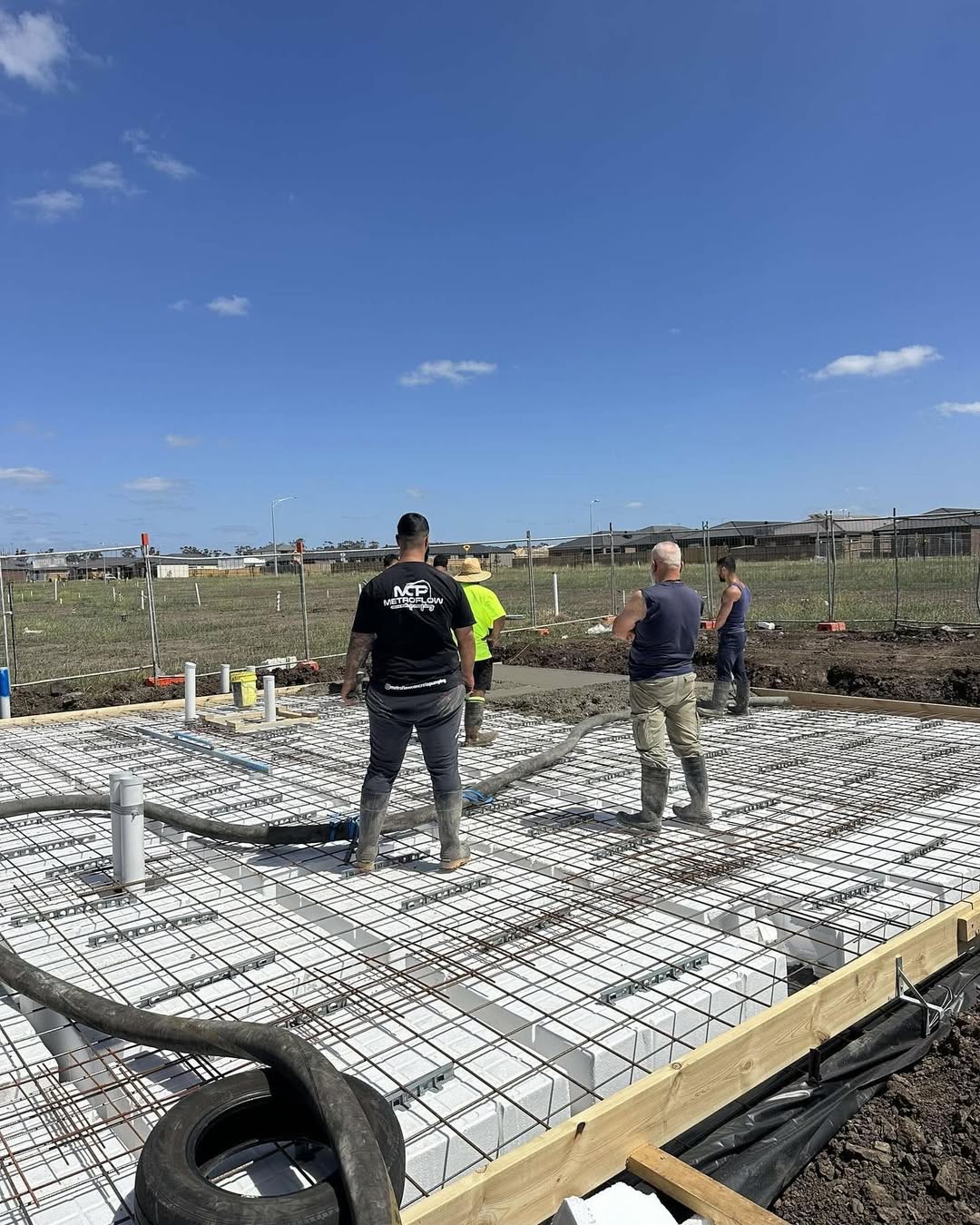
Block fill — pumping grout into concrete masonry unit (CMU) walls, columns, and cores — sits between residential line work and commercial precision. Volumes are modest per visit but stakes are high: blow-out blows mortar joints across the site; incomplete fill leaves hollow structural walls; wrong mix won't flow into cores. Melbourne infill apartments, commercial shells, and residential feature walls all use pumped block fill daily.
Mix for block fill — not slab mix in a smaller order
Block fill grout uses finer aggregate, higher slump, and flow characteristics to travel through cores and around reinforcement. Typical errors:
- Using structural 20mm aggregate mix — locks in the line before filling the wall.
- Slump too low — grout won't reach bottom cores on multi-lift fills.
- Slump too high without cohesion — segregation and blow-out risk.
Batch plant block-fill mixes exist for a reason; use them and tell the pump operator the spec.
Pump and line setup
Line pumps dominate — small volume, precise control, hose to wall fill ports or open tops. Pressure control matters: operators feed steadily, not "max button until something happens." Segregation in grout lines shows as sand packing at bends.
Vertical hose runs to upper lifts need bleed points and fill sequence planning — bottom cores first, upper lifts after confirmation of fill rise — mason on site confirms, not guesswork.
Blow-out prevention
- Grout pressure limited — operator experience, not rookie enthusiasm.
- Walls inspected — ungrouted courses, weak mortar, missing ties flagged before pump start.
- Fill ports open and observed — mason watches fill rise.
- Don't pump unknown wall construction — retrofits and partial fills need method statements.
Volume estimation and ordering
Under-ordering leaves voids; over-ordering wastes grout on a mix you can't reuse. Masons calculate net fill; we advise on line wastage allowance — smaller than slab pours but not zero. Combine adjacent wall sections in one pump visit to share setup cost — same logic as combined residential pours in our cost guide.
Access on infill sites
Inner Melbourne infill — tight side access, line through building ground floor, pump on street. Reach planning and site prep still apply at small scale.
When we decline or defer
Unsafe wall condition, ambiguous fill responsibility, or spec calling for unpumpable aggregate — we'll say so. Block fill incidents are messy; prevention beats heroics.
Block fill is quick money when done right — slow liability when treated like "small pour, any mix."
Multi-storey block fill sequencing
Multi-level CMU walls fill level by level — grout must show at observation ports before next lift. Pump operator maintains pressure below blow-out threshold while mason confirms rise. Rushing beats inspection; empty cores discovered at lintel height are expensive demolition.
Winter grout behaviour
Grout stiffens faster in cold line on winter infill jobs — shorter runs, smaller batches, heated storage where spec allows. See winter pumping for broader cold-weather coordination with batch plant.
Partial height walls and bond beams
Grout fill to bond beam level leaves lower cores filled earlier — revisit sequencing when bond beam pour separate. Pump operator confirms which lift is today; filling to wrong height leaves rework coring. Mason marks fill height on wall face; operator places to mark, not guess.
Small commercial grouts sometimes specify non-shrink additive — pumps like standard grout with slightly higher viscosity; rate reduced accordingly.
Frequently asked questions
- Same grout as slab mix? No — block fill grout is finer, flowable design — separate order.
- Who watches fill rise? Mason on site — operator controls pressure and rate.
- Blow-out liability? Shared prevention — wall condition and pressure control both matter.
- Minimum volume? Minimum hire may apply on tiny fills — ask when quoting.
Acoustic and fire-rated wall systems sometimes specify proprietary grout — compatibility with pump line materials and maximum pressure documented in manufacturer data sheet should sit on site with mason and operator before pressurising cores.
High-rise block fill on Melbourne CBD infill may sequence with jump form climb — grout pour window short; pump standby rate agreed when window measured in minutes not hours.
Booking with MetroFlow
Every pour starts with the same information: address or site, estimated volume, mix details if known, and photos of access from street to pour point. We respond with pump type recommendation, boom class if applicable, and all-in pricing without hidden wash or travel surprises on standard Metro jobs. On program work across Victoria, we hold rates and assign consistent operators where repeat quality matters. Whether your job is a Narre Warren house slab, a Geelong warehouse bay, or a Richmond basement wall, the physics of pumping don't change — only the geometry and mix do. Send the details through our quote form or call direct; we'd rather talk you out of the wrong pump than sell you the expensive one. Good pours are boring pours — preparation, honest communication, and operators who've seen your problem before make pour day forgettable in the best way.
CMU or column fill scheduled? Send grout spec and lift heights — we'll quote line setup and coordinate with your mason.