
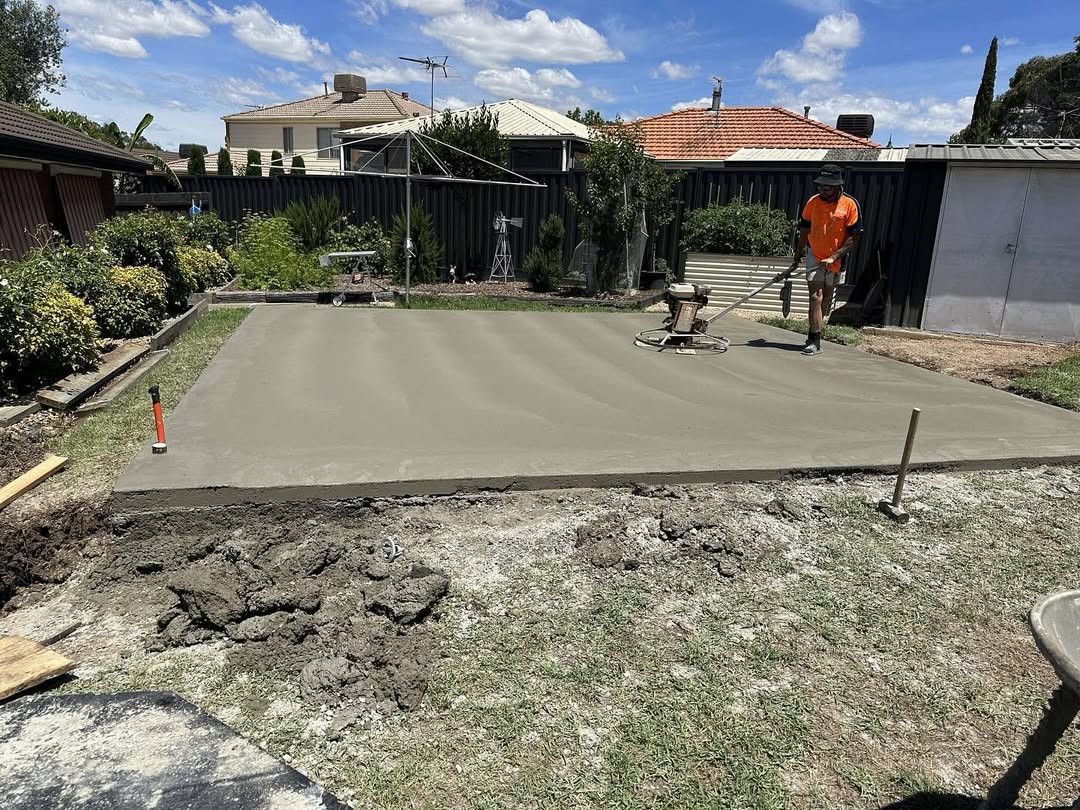
Every May, someone asks us whether they should postpone their slab until spring. Almost always, the answer is no — Victorian winters are entirely workable for concrete, and winter bookings are often easier to get exactly because people believe they aren't. But cold genuinely changes how concrete behaves, and a winter pour planned like a summer one will disappoint everyone involved.
Here's what actually matters when the mercury drops.
What cold does to concrete
Concrete gains strength through a chemical reaction — hydration — and that reaction runs slower in the cold. Roughly speaking, a slab that would take a day to reach walkable strength in summer can take two or more in winter. Below about 5°C the reaction slows dramatically, and fresh concrete that freezes before reaching adequate strength can be permanently damaged.
None of this stops a pour. It just changes the schedule around it: later starts, longer waits before finishing operations, longer protection of the fresh surface, and patience before loading the slab.
What we adjust on the pumping side
- Start times move later. The classic 6am summer start exists to beat the heat. In July, pouring onto frost-cold formwork at dawn is counterproductive — a 9am start onto ground the sun has touched gives the concrete a warmer bed and the crew a better day.
- The line gets managed differently. Concrete sitting static in a cold steel line stiffens faster than people expect. On slow winter pours we plan line runs shorter, keep concrete moving, and coordinate truck spacing so the line never stands full and idle for long.
- Priming and wash-out take care. Cold water, cold gear and slippery frost-covered surfaces all get respect. Not glamorous, just professional.
What the batch plant can do
Your concrete supplier has levers for winter, and it's worth a conversation when you order:
- Accelerators speed early strength gain — common and cheap for winter slabs.
- Hot water batching raises the delivered temperature of the mix on genuinely cold mornings.
- Mix tweaks — slightly higher cement content or a different cement blend — buy back some of the strength-gain time the cold steals.
Tell the plant it's a winter pour with morning frost and they'll spec accordingly. Tell us too — mix changes affect pumpability, and we'd rather know before the first truck.
What the concreter watches
Finishing in winter is a different rhythm. Bleed water sits longer on the surface, so finishers wait longer between operations — rushing the trowel onto bleed water is how winter slabs get dusty, weak surfaces. Curing matters more, not less: fresh concrete needs protection from frost for the first nights (curing blankets, plastic, even a tent of builder's film on small pours), and forms stay on longer. Good concreters know all this cold; if yours shrugs at the word "winter", that's information.
Rain is the real winter enemy
Cold is manageable; water is the wildcard. Rain on fresh concrete damages the surface, and a saturated site can stop a pour before it starts — soft ground affects boom set-ups in particular. Winter scheduling in Victoria means watching the radar from about three days out and being ready to shuffle. We hold winter schedules a little looser for exactly this reason, and a pour postponed by weather with decent notice costs you nothing with us.
The upside of winter pours
- Availability. Pumps, concreters and batch plants all have more room in the calendar. The spring rush is real — beat it.
- Slow curing is good curing. Concrete that gains strength slowly in cool, damp conditions often ends up stronger and less shrinkage-cracked than a summer slab that dried too fast.
- No hot-weather drama. Nobody is racing evaporation or adding water to a cooking load at the far end of a long truck queue.
We pump all winter, every winter, from bayside Melbourne to the frosty side of Sunbury and the Macedon corridor. If you're weighing up a winter slab, talk to us — we'll tell you honestly whether your dates and site suit it, and set the pour up to succeed.