
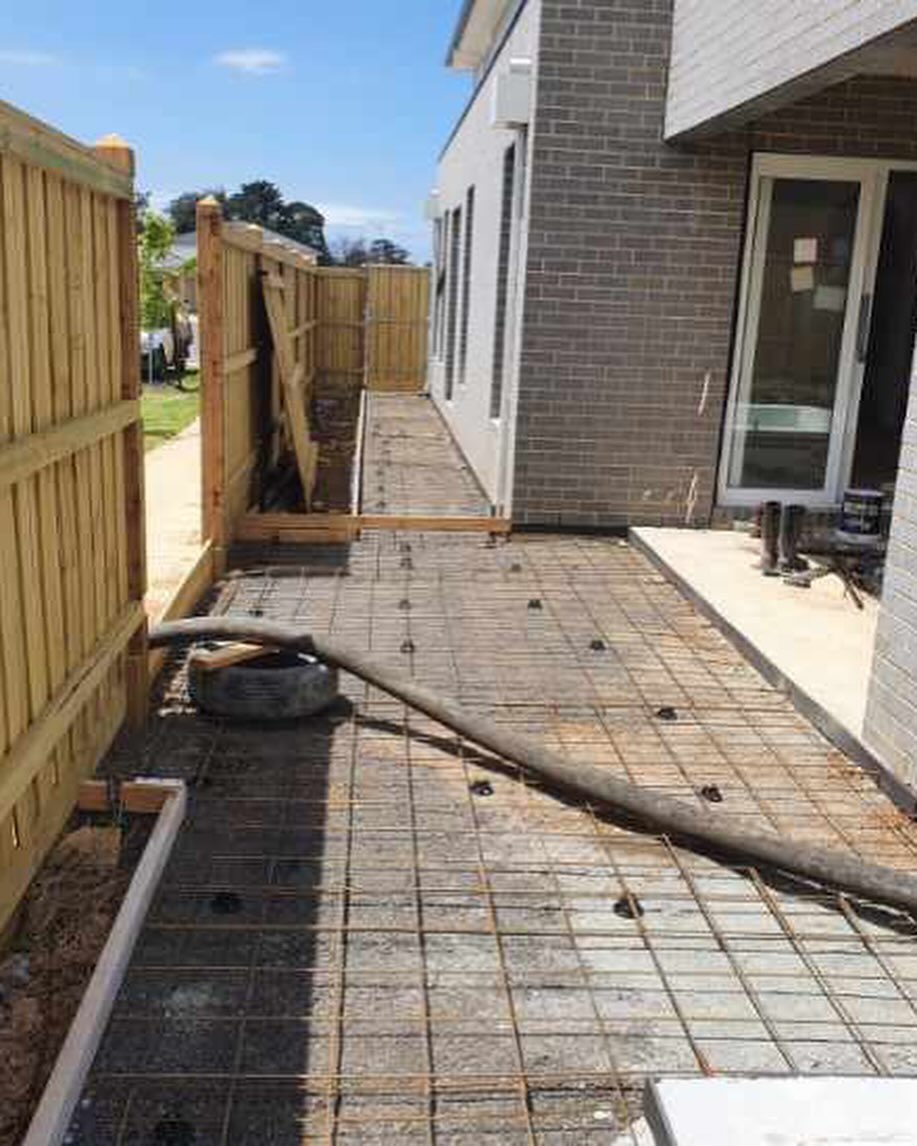
The term "water booster" confuses people because it sounds like we're boosting the concrete with water — the last thing any operator wants. In practice, people mean an auxiliary pump placed partway along a long line to share pressure duty, or occasionally hydraulic assist systems on specialist setups. On extreme line runs across Melbourne — acreage slabs in Sunbury, pipeline trenches, multi-leg commercial pours — boosters turn an impossible reach into a Tuesday.
When a single pump runs out of pressure budget
Concrete in a line consumes pressure through friction and gravity. Our line reach guide covers the basics: distance, height, bends, diameter, mix. Past a point, even a large trailer pump flat-lines on the gauge with nowhere left to go. Options:
- Redesign the route — fewer bends, larger diameter, different stand location (often cheapest if site allows).
- Adjust the mix with plant approval — more paste, smaller top size.
- Add a booster pump mid-line to split the work.
- Switch to boom placement if access and volume suit — see line vs boom.
How mid-line boosters work
A booster is a second pump unit connected into the pipeline — typically on the high-pressure side of a long horizontal or after a major vertical rise. The primary pump feeds the line; the booster takes over suction from the line segment ahead and pushes onward at higher available pressure.
Setup demands experienced operators:
- Correct pipe sizing and clamping at the junction — this is high pressure.
- Synchronised operation so neither unit starves or surges the other.
- Communication between operators — often two MetroFlow units on coordinated radio.
- Safe access to the booster stand — not in an excavation without shoring.
"Water booster" confusion on site
Some clients use "water booster" for the pressure washer used in wash-out, or for municipal water boosters on high-rise plumbing — unrelated to concrete. If your engineer mentions a booster on a concrete pour, clarify: auxiliary concrete pump, not water injection. Water injection into a line mid-pour is not a standard practice and kills mix design.
Cost and scheduling implications
Two pumps, two operators, extra setup time — boosters are priced honestly as specialist work. Still often cheaper than:
- Crane and skip placement.
- All-day wheelbarrow labour on a 200m³ acreage slab.
- Re-pouring after cold joints from interrupted placement.
We quote boosters when site measurements show single-pump margin is thin — not as a default upsell.
NPSH and intake side on boosters
Boosters inherit intake constraints from the line segment feeding them. If that segment allows air entrainment or partial emptying between truck changes, the booster cavitates — same family of problems as NPSH issues on hopper feed. Truck spacing and continuous mode from commercial scheduling applies to residential monster runs too.
Planning a long run with MetroFlow
Send a marked-up site plan or satellite measure with height changes. Tell us volume and mix. We'll say single pump, booster, or "move the stand two metres left and save the booster fee." That honesty is how repeat clients happen.
Long lines are solvable problems. Boosters are one tool — used when the physics says so, not when the marketing department says so.
Case pattern — acreage slab Melbourne fringe
A 180-metre run to a shed slab on a Lancefield acreage is a classic booster conversation: single pump might reach on paper, but margin disappears when the mix stiffens on load four or the route adds two unplanned bends around established trees. Booster placement at the 90-metre point splits pressure duty and keeps output steady for the finishing crew — still cheaper than crane and skip for that volume.
Documentation for commercial clients
When boosters feature in method statements, we document pump positions, line schematic, and operator communication protocol. Site induction covers both units' exclusion zones — twice the plant, twice the safety briefing, no shortcuts.
Radio protocol between units
Primary and booster operators maintain continuous radio contact — start, stop, and rate changes synchronized. Unilateral speed change on one unit without call causes line shock and partial segregation at junction. Pre-pour radio check and agreed call words prevent confusion when multiple trades crowd channel.
Exclusion zone expands to cover both pump stands and the junction point — site safety briefing covers two setups, not copy-paste from single-pump SWMS.
Frequently asked questions
- Is booster always double the price? No — priced for second unit, setup, and coordination; still often beats alternatives.
- Can booster help on vertical only? Sometimes — geometry review determines if booster at base of rise helps.
- Who operates booster? Second ticketed MetroFlow operator on coordinated pours — not site labour.
- Can we avoid booster with bigger primary pump? Sometimes larger pump adds margin — we model both options in quote.
Booking with MetroFlow
Every pour starts with the same information: address or site, estimated volume, mix details if known, and photos of access from street to pour point. We respond with pump type recommendation, boom class if applicable, and all-in pricing without hidden wash or travel surprises on standard Metro jobs. On program work across Victoria, we hold rates and assign consistent operators where repeat quality matters. Whether your job is a Narre Warren house slab, a Geelong warehouse bay, or a Richmond basement wall, the physics of pumping don't change — only the geometry and mix do. Send the details through our quote form or call direct; we'd rather talk you out of the wrong pump than sell you the expensive one. Good pours are boring pours — preparation, honest communication, and operators who've seen your problem before make pour day forgettable in the best way.
Long line or big vertical on your job? Get a reach assessment — we'll price the right configuration before pour day surprises you.