
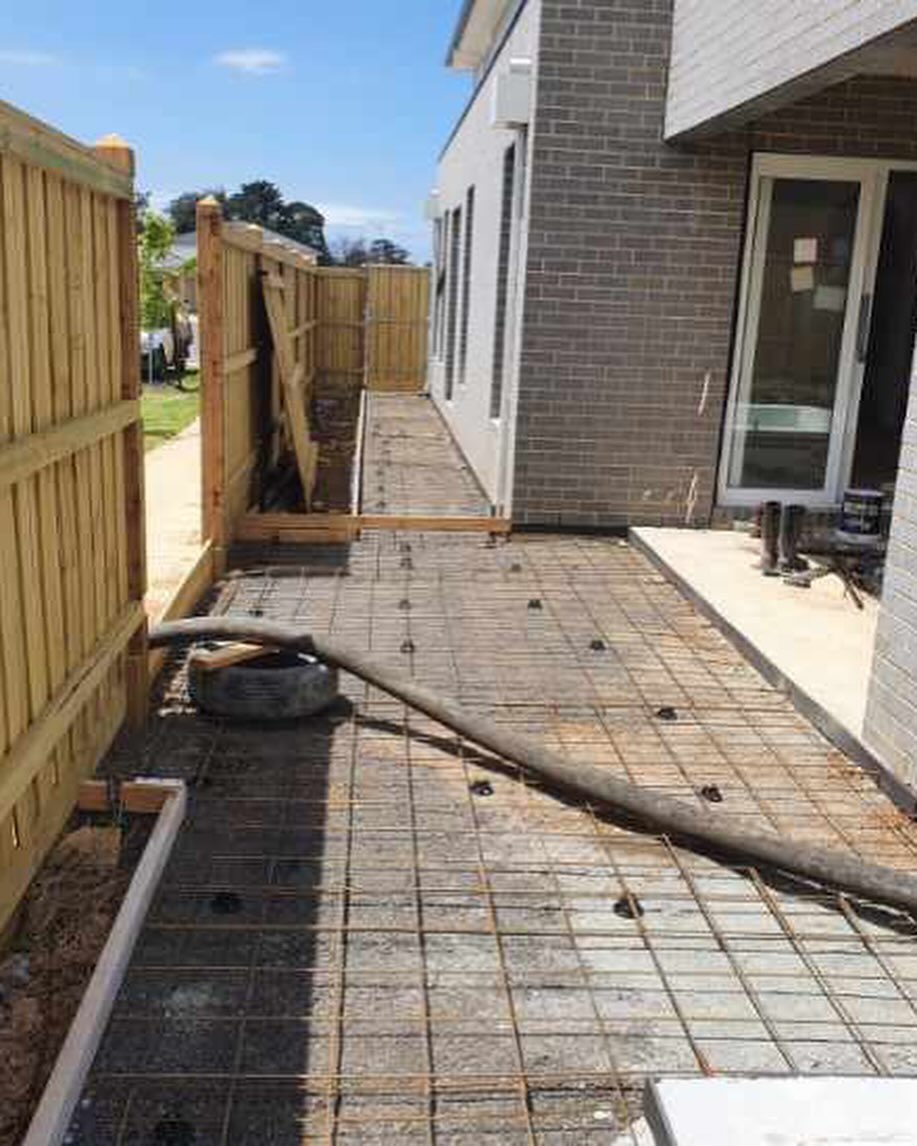
Lime concrete isn't mainstream on Melbourne estate slabs, but it hasn't disappeared either. Heritage rectification in inner suburbs, lime mortars extended to lightweight structural fills, and some sustainable mix designs still call for lime-rich binders. When those jobs need a pump rather than wheelbarrows, the mix behaves differently enough that your standard house-slab assumptions will let you down.
What makes lime concrete different in a line
Portland cement sets quickly and generates early rigidity. Lime hydrates more slowly, produces a stickier paste, and often carries more fine material for a given slump. In a pipeline that means:
- Higher internal friction at the same measured slump — the slump test lies a little.
- More bleed water under pressure, which can show up as wet patches at the hose end if you pause.
- Slower stiffening in the line on hot days — good for finish windows, risky if the pour stalls.
- Greater sensitivity to rework — lime mixes don't forgive overworking at the placement end the way a straight 25 MPa slab mix might.
Pumpability in practice
We pump lime concrete regularly on restoration and specialty jobs. Success comes from coordination, not magic additives:
- Slump band agreed upfront. Slightly higher than you'd pour for the same MPa in OPC is common — but agreed with the specifier, not invented on site.
- Aggregate grading matters more. Well-graded sand and modest top size (typically 10mm or less) keeps paste lubricating the line. Chunky stone in a sticky lime paste is a long day.
- Steady feed rate. Stop-start pumping segregates fines at bends. Our operators keep a continuous rhythm on finish-critical work.
- Line diameter and bends. Standard 125mm line is fine for most volumes; we minimise 90° bends on long runs the same as any harsh mix.
Heritage and inner-Melbourne access
Lime jobs cluster where the buildings are old and the access is awful — Fitzroy, Carlton, East Melbourne laneways. That's line pump territory: hose through gates, along side paths, into courtyards. Boom trucks rarely fit, and the last thing a heritage architect wants is a 32-tonne truck on cobbles.
We walk the route, protect soft paving, and plan wash-out away from stormwater — lime wash water has different disposal expectations than a standard OPC wash. Your concreter should confirm local requirements; we keep wash contained on site as standard.
Common mistakes
- Ordering like a standard slab mix and adding water at the truck — destroys the designed lime ratio and makes pumping worse, not better.
- Undersized crew at the hose end — lime mixes need confident placement because the working time is real.
- Ignoring weather. Slow hydration helps in summer; in a cold Victorian winter morning, protection and timing matter more.
Working with your supplier and specifier
The batch plant needs to know it's a pumped lime mix, not a render batch. We need to know MPa target, slump range, aggregate size and whether colour or finish is critical. If your specifier hasn't pumped lime before, we're happy to join a short call — it's cheaper than a blocked line at load three.
Lime concrete is absolutely pumpable across Melbourne and regional Victoria. It just demands the same respect any non-standard mix deserves: correct design, realistic access planning, and operators who've seen sticky paste before.
Working with heritage specifiers
Heritage projects often specify lime mortars extended to structural fill or repointing scaled to volume. Specifiers care about breathability, colour match to existing fabric, and minimal shrinkage cracking at interfaces with old masonry. Pump operators care about getting that mix to a courtyard without wheelbarrows through a heritage gate. The two concerns meet at the batch plant — pumpability adjustments must stay inside the conservation brief.
We recommend trial loads on heritage jobs where travel time exceeds forty minutes. Lime stiffens differently in transit than OPC; knowing before pour day prevents the architect watching a stiff load get rejected at the gate.
Cleanup and neighbour relations
Lime wash water is alkaline and visible on bluestone laneways and cobbled crossings. Containment mats and agreed wash zones protect relationships with adjoining owners — especially on row-house projects in Carlton and Fitzroy where the pump stands on shared access.
Ordering and ticket details
On lime pours, the batch ticket should show binder type, lime content or blended ratio, and any additives affecting set and colour. Operators photograph tickets on first load for dispute resolution — lime colour drift between loads is visible on the ground and expensive to grind out. If your supplier switches source mid-order, stop and reassess before continuing placement.
Volume planning includes line priming waste and hose-end waste higher than OPC — sticky matrix clings in bends. Order allowance discussed with concreter and pump operator together, not guessed from slab measure alone.
Frequently asked questions
- Is lime concrete weaker? Design-dependent — not inherently weak; spec defines strength.
- Heritage approval needed? Conservation requirements separate — pump method unchanged.
- Winter lime pours? Workable with protection and mix adjustment — plan curing.
- Wash disposal? Contained on site — alkaline wash handled per environmental plan.
Heritage or specialty lime pour coming up? Get in touch with mix details and site photos — we'll quote the line route and flag anything the batch plant should adjust.